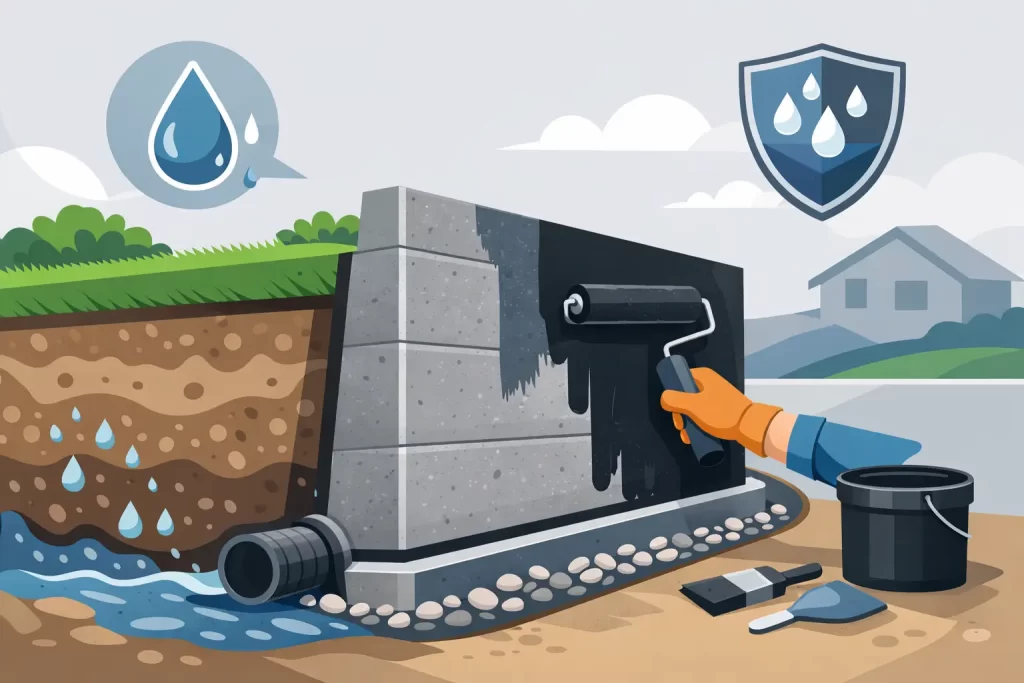
A retaining wall can look solid for years and still be one hard rain away from trouble. In Central Texas, that usually shows up fast – damp staining, white mineral deposits, muddy runoff, bowing sections, or water finding its way where it should not. If you are wondering how to waterproof retaining walls, the answer is not just coating the exposed face and hoping for the best. Real waterproofing starts behind the wall, where water pressure builds.
That is the part many property owners never see, and it is also where the biggest mistakes happen. A retaining wall fails less often from surface wear than from trapped water, poor drainage, and patchwork repairs that ignore the source.
How to waterproof retaining walls without trapping water
The first thing to understand is that a retaining wall does not stay dry by blocking every drop of water. It stays dry by managing water. Soil holds moisture, runoff moves downhill, irrigation adds volume, and heavy storms can saturate backfill quickly. If water cannot drain away, hydrostatic pressure builds behind the wall and pushes on every joint, crack, and weak point.
That is why the best waterproofing system is always a combination of drainage and a true below-grade barrier. If you only apply a coating to the front face, water can still collect behind the wall and continue causing pressure-related damage. In many cases, that kind of repair improves appearance but does little to extend service life.
The right approach depends on wall type, site grade, soil conditions, and whether the wall is already leaking or moving. A concrete retaining wall, CMU wall, stone wall, and timber wall each handle moisture differently. Some walls can be excavated and waterproofed from the soil side. Others may need a more limited repair strategy because of access, landscaping, or nearby structures.
Start with diagnosis before materials
Before choosing a membrane, coating, or sealant, inspect the wall for the actual path of water. This is where many projects go off course. A wet spot at the base of the wall does not always mean the wall itself is the only problem. Roof runoff, missing gutters, broken irrigation lines, poor slope, and surface drainage failures can overload even a well-built retaining wall.
Look for cracking, movement, displaced capstones, clogged weep holes, soil erosion, and signs of efflorescence. If the wall has leaning sections or wide structural cracks, waterproofing alone may not solve the problem. Water management and structural repair often have to happen together.
For homeowners, the practical takeaway is simple. If the wall is just showing light moisture staining, you may be dealing with early drainage issues. If it is bulging, separating, or leaking heavily during storms, you need a more thorough repair plan before cosmetic work.
The core system behind a properly waterproofed wall
When people ask how to waterproof retaining walls correctly, the most reliable answer usually includes four parts working together: excavation when access allows, substrate repair, a waterproof membrane, and drainage board with proper backfill and discharge.
1. Expose the back side of the wall
If the wall can be accessed from the retained soil side, excavation is the best starting point. This gives you access to the area actually in contact with moisture. It also allows the installer to inspect cracks, voids, failed joints, and surface defects that would never be visible from the exposed face.
Excavation has trade-offs. It can increase labor cost, and on tight sites it may require removing landscaping, hardscape, or fencing. But if the wall is leaking or under pressure, it is often the only way to do a lasting repair rather than a temporary surface treatment.
2. Repair the substrate first
A membrane is only as good as the surface under it. Cracks, honeycombing, open joints, and rough voids should be repaired before waterproofing begins. Depending on wall material and severity, that may involve crack sealants, patching compounds, or injection methods for active water paths.
This is also the stage to address construction joints and penetrations. If those weak points are left untreated, they often become the first place the system fails.
3. Apply a true below-grade waterproofing membrane
For retaining walls, damp-proofing and waterproofing are not the same thing. Damp-proofing resists soil moisture. Waterproofing is designed to hold up under more demanding conditions, including prolonged moisture exposure and water pressure.
A professional-grade sheet membrane or fluid-applied waterproofing material is typically installed on the soil-facing side of the wall. The product choice depends on wall condition, compatibility with the substrate, and site conditions. Fluid-applied systems can work well around irregular surfaces and penetrations. Sheet membranes offer consistent thickness but require careful detailing at seams and transitions.
Whichever material is used, installation matters as much as the product itself. Pinholes, thin coverage, poor adhesion, and bad termination details can turn a good material into a short-lived fix.
4. Add drainage board and free-draining backfill
This is the part too many repairs skip. A membrane protects the wall, but drainage board helps relieve pressure and gives water a path downward to the drain system. Free-draining gravel or similar backfill reduces water retention compared with dense clay soils.
At the base of the wall, a perforated drain line should collect and move water to daylight or another approved discharge point. If the outlet is blocked or poorly designed, the system can still fail even with a quality membrane in place.
Weep holes, coatings, and other common questions
Weep holes can help, but they are not a complete waterproofing system. Their job is pressure relief, not primary waterproofing. If a wall relies only on weep holes and has no membrane or drainage layer, water can still saturate the structure over time.
Surface coatings on the exposed face also have limits. They can improve appearance, reduce minor moisture intrusion, and protect against weathering, but they do not stop water from accumulating behind the wall. For above-grade portions of decorative or lightly loaded walls, coatings may be part of the solution. For below-grade leakage problems, they are rarely enough on their own.
This is where honest diagnosis matters. Some walls need full excavation and waterproofing. Others can be stabilized with better drainage, crack repair, and targeted sealing if the underlying structure is sound. The right fix is the one that addresses the water path, not just the symptom you can see.
How retaining wall waterproofing works in Central Texas
Austin-area properties add a few local complications. Expansive soils can shift and place extra stress on retaining walls. Intense downpours can overload undersized drainage systems in a single storm. Heat also shortens the life of lower-grade materials, especially if they were not installed to manufacturer specifications in the first place.
That is why a one-size-fits-all recommendation usually falls apart here. A wall holding back dry, granular soil on a well-drained lot behaves very differently from one surrounded by clay, irrigation overspray, and roof runoff. On some sites, the smartest investment is improving drainage before touching the wall coating at all. On others, delayed waterproofing only gives water more time to erode backfill and worsen movement.
Signs the wall needs professional attention
If you notice recurring moisture, staining, or sediment washing through joints, do not assume it is just a cosmetic issue. A retaining wall that stays wet is telling you water is not being managed properly. When that turns into cracking, leaning, or movement, the repair cost usually goes up.
Professional help makes the biggest difference when the leak source is unclear, the wall is below grade, or past repairs have failed. An experienced waterproofing contractor can separate drainage problems from structural ones, identify where water is entering, and recommend a repair that fits the wall instead of applying a generic coating.
Rainwater Restoration & Waterproofing sees this often on residential and small commercial properties where the obvious wet area is not the true origin of the problem. Good waterproofing work is less about covering surfaces and more about tracing water, relieving pressure, and using materials that hold up in real conditions.
What property owners should expect from a lasting repair
A proper retaining wall waterproofing project should do more than stop visible leaks for a few weeks. It should control water behind the wall, protect the structure below grade, and reduce the chance of repeat repairs after the next heavy storm.
That may mean a larger upfront scope than a simple patch job, and that is not always what people want to hear. But when water pressure is the real issue, the cheaper shortcut often becomes the more expensive option later.
If you are deciding how to waterproof retaining walls on your property, think beyond the surface. Ask where the water is coming from, where it is supposed to go, and whether the current wall system actually gives it a path. The best repair is usually the one that deals with those questions first – because a dry wall starts with controlling the water you cannot see.